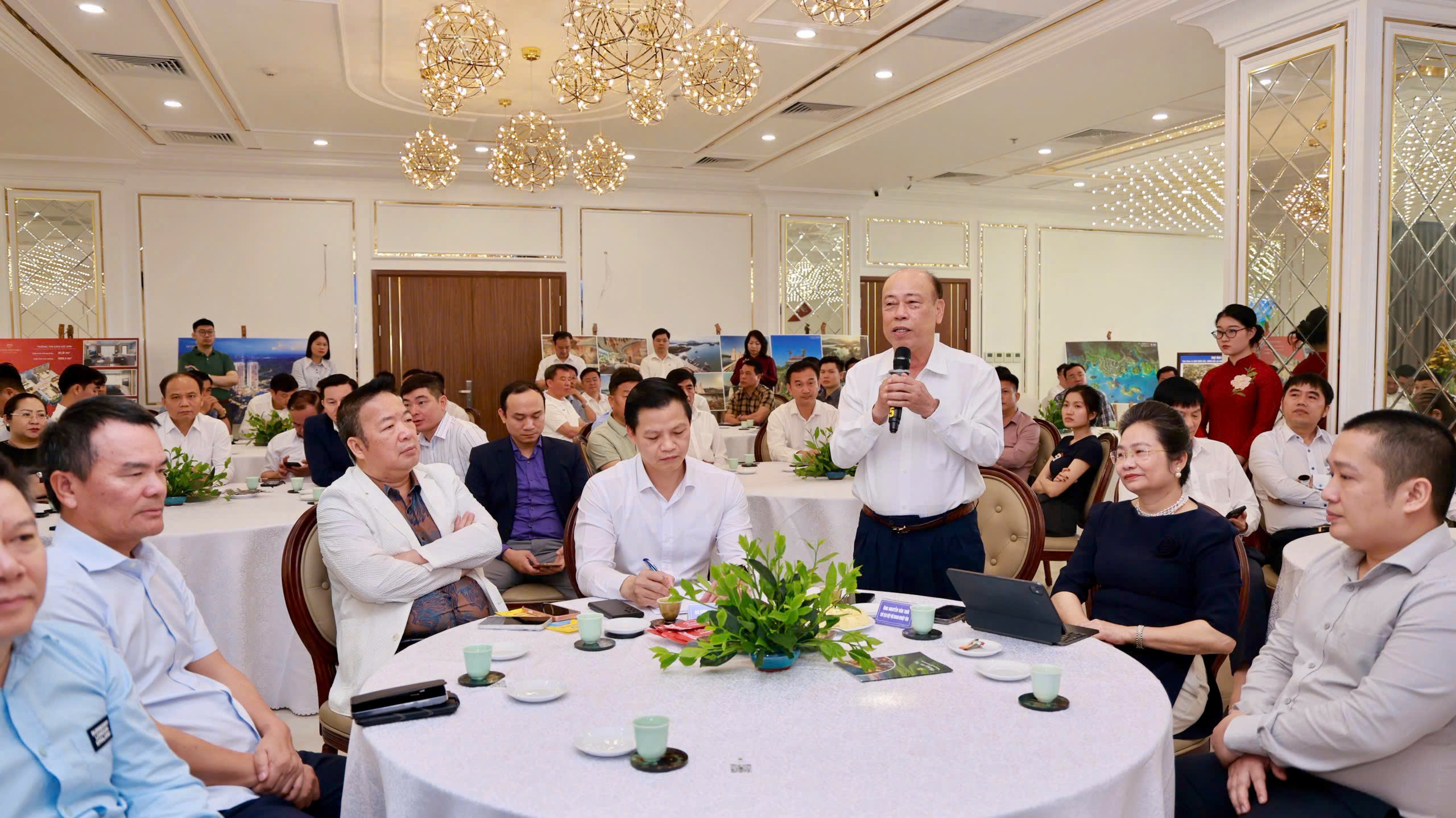
On the morning of April 4, at Prime Hotel (Phan Dinh Phung Ward), the People’s Committee of Thai Nguyen Province organized the April 2026 “Breakfast with Entrepreneurs” program under the theme “Housing and Social Housing Development,” attracting a large number of business representatives.
Attending the program were Mr. Vuong Quoc Tuan, Member of the Party Central Committee, Deputy Secretary of the Provincial Party Committee, and Chairman of the Provincial People’s Committee; members of the Provincial Party Standing Committee; leaders of the Provincial People’s Committee; and representatives of various departments and agencies.
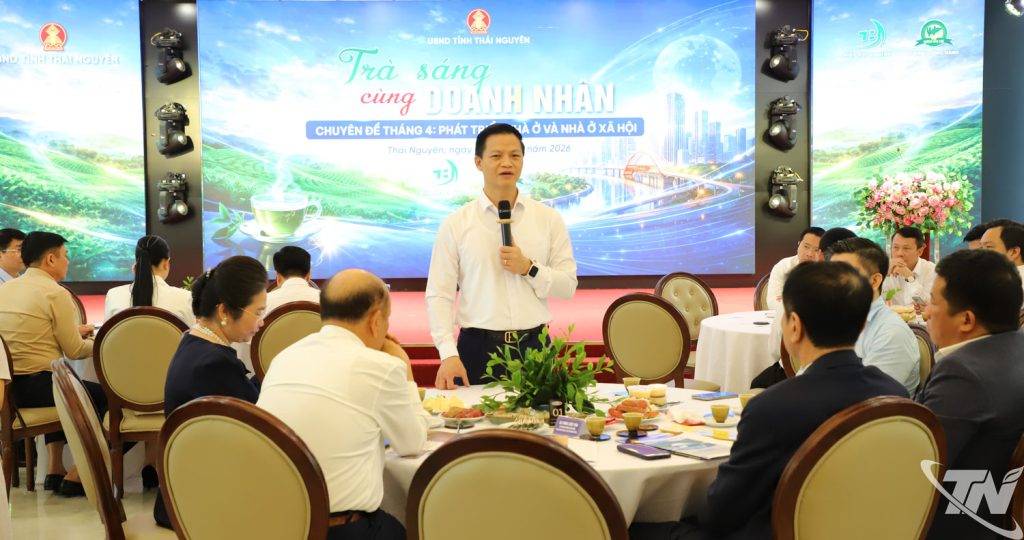
Chairman of the Provincial People’s Committee Vuong Quoc Tuan delivered a speech at the “Breakfast with Entrepreneurs” program held on the morning of April 4 under the theme “Housing and Social Housing Development.”
Unblocking Policies, Shaping Development Space
Following the positive outcomes of the first “Breakfast with Entrepreneurs” program, the selection of housing development as the next thematic focus continues to reflect the province’s long-term orientation toward 2030.
As Thai Nguyen enters the 2026–2030 period with the goal of rapid and sustainable growth, particularly in industry and urban development, housing development has become a key factor in expanding development space and enhancing growth quality.
Speaking at the program, Chairman Vuong Quoc Tuan emphasized that housing development is an important prerequisite for socio-economic growth. According to planning orientations, Thai Nguyen is expected to develop 37 industrial parks with a total area of approximately 18,000 hectares, forming a large-scale industrial land fund that will attract investors and lead to a rapid increase in mechanical population growth.
On that basis, the province is formulating a new housing development program aligned with development space and market absorption capacity. The orientation is to synchronously develop both commercial housing and social housing to meet the diverse needs of residents and the workforce.
With rapid urbanization, the province’s population is forecast to increase by approximately 450,000–500,000 people in the coming years, creating significant pressure but also substantial room for housing market expansion.
Providing additional information at the event, the Chairman stated that by the end of the first quarter of 2026, Thai Nguyen ranked among the top 15 provinces nationwide in growth rate, achieving approximately 8.55%. This serves as an important foundation for implementing development goals in the upcoming period.
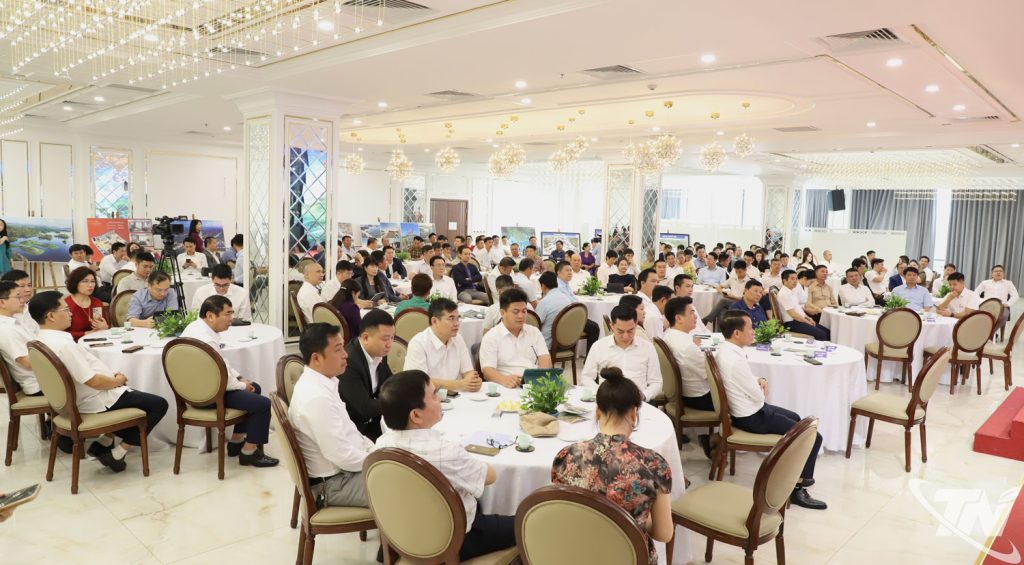
Overview of the “Breakfast with Entrepreneurs” program.
Within the overall development landscape, housing—especially social housing—plays an increasingly important role. As an industrial, educational, and innovation hub of the region, Thai Nguyen is experiencing rapid urbanization and rising housing demand, particularly among workers and middle- to low-income earners.
Based on the Provincial Master Plan for 2021–2030, with a vision to 2050, and the orientation to develop 14 urban areas, the province has issued a housing development program through 2030, with a vision to 2040. The objective is to build a transparent and stable real estate market that meets residential needs.
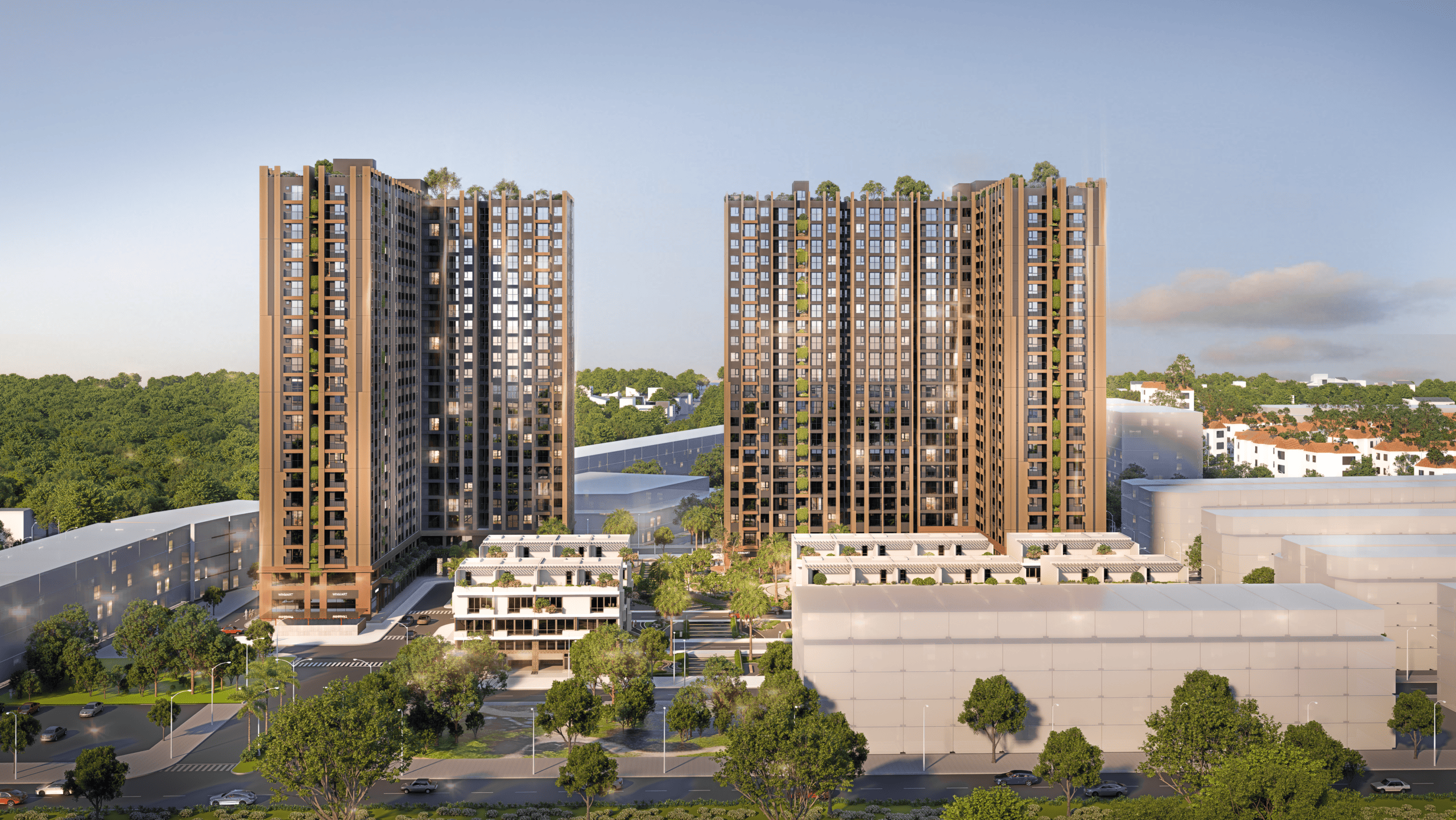
During the 2021–2025 period, synchronized urban areas have been formed, creating diverse housing supply. Building on this momentum, by 2030 the province aims to reach over 65.5 million square meters of residential floor area, averaging 35 m² per person, equivalent to approximately 80,000 housing units, of which about 60,000 units will be social housing.
Social housing has been identified as a priority sector, with 73 projects covering nearly 259 hectares. These projects are implemented flexibly, including the 20% land allocation within urban areas and large-scale standalone projects, ensuring strong linkage with industrial parks, urban areas, and training institutions to enhance absorption capacity.
Notably, the implementation roadmap is developed on an annual basis, enabling investors to proactively plan resources while minimizing risks during execution.
Removing Obstacles, Accelerating Implementation
At the program, the business community highly appreciated the direct dialogue model with provincial leaders, considering it an effective channel to promptly update orientations, policies, and investment opportunities in housing development.
According to business representatives, the legal framework for housing, particularly social housing, has been gradually improved; administrative procedures have been simplified, creating more favorable conditions for investors. However, certain difficulties remain, including rising input costs and pricing mechanisms for social housing that affect investment efficiency.
Some issues related to access to preferential credit, identification of eligible beneficiaries, compensation and site clearance, and resettlement arrangements have not been fully resolved, resulting in slow progress for certain projects.

Business and investor representatives shared their opinions at the program.
Based on this reality, enterprises proposed that the province continue improving mechanisms and policies; establish official information channels for projects; facilitate better access to credit capital; and accelerate site clearance to create clean land funds.
Some opinions also suggested reviewing planning adjustments to increase building height in suitable areas to enhance land-use efficiency and reduce social housing costs.
In his concluding remarks, Chairman Vuong Quoc Tuan affirmed that the province will continue improving the investment environment, placing enterprises at the center of service, and considering business performance as a measure of governance effectiveness.
The province targets double-digit growth for the 2026–2030 period, striving for approximately 8.5% growth in 2026, and requires sectors to maintain synchronized growth momentum, with housing development playing an important role.
Departments and agencies are required to enhance responsibility, improve service quality, focus on removing obstacles in mechanisms and procedures, standardize and publicize processes, ensure transparency, and avoid delays.
The overarching directive is to enhance responsibility, improve service attitudes, and maximize the removal of obstacles in administrative procedures, creating favorable conditions for enterprises to invest and conduct business in compliance with legal regulations.
Following the program, the Provincial People’s Committee will issue a conclusion notice; the Office of the Provincial People’s Committee will consolidate all feedback and clearly assign responsibilities to relevant units for implementation.
Regarding housing development, the Department of Construction, Department of Finance, and related units are tasked with reviewing all ongoing and completed projects; assessing progress, scale, and land funds; compiling reports on development demand; and proposing priority project lists consistent with planning and practical needs.
Notably, the province will continue promoting the “60% green lane” mechanism for social housing projects, allowing parallel implementation of investment and planning procedures to shorten timelines; while also researching improvements in financial mechanisms, credit policies, and maintaining regular dialogue channels to promptly address difficulties.
With a large market scale, abundant land resources, a clear implementation roadmap, and strong reform determination, Thai Nguyen is gathering favorable conditions to attract investment in housing and social housing development, thereby promoting growth and shaping a modern and sustainable urban landscape in the coming period.
Source: Thai Nguyen News